Thursday, 14 March 2019

On board the "Canadian": our country from a train

We flew from Guatemala to Toronto.  From there we crossed Canada on board Via Rail's Canadian.  


After Guatemala, this journey reminded us how fortunate we are to live in such a majestic, affluent and humane country.  


Via Rail's Timetable:  The Triumph of Hope over Experience


If you have a plane to catch, maybe crossing Canada by train is not the best idea.  We started our train journey 11 and a half hours late.  By the time we got into Vancouver we were 24 hours late.  Some passengers experience longer delays, while for others, the train may be only a few hours late.

In this context, this sign that we saw in Melville, SK, had a certain poignant charm:


It's the precision that is so endearing - Departing for Vancouver at 6:34 pm.  What's with being so specific about the minute, let alone the hour?  Wouldn't it be more realistic, just to state the train will depart for Vancouver on say "Thursday-ish"?


Why this incredible tardiness in an otherwise well run operation?  The answer has to do with the fact that the track bed is owned by the freight companies.  Canadian National Railways owns the route used by the Canadian.  The Via Rail train is just a little salmon swimming against the massive growing tide of freight volumes in general, and oil by rail in particular.

Oil production in Western Canada has outstripped the growth in pipeline capacity.  Consequently the oil industry has been forced to rely on "pipelines on wheels" in order to get their product to market:


The amount of oil shipped in this manner has grown dramatically.


As a resident of BC, I cannot help worrying that our provincial government may be running into the Law of Unintended Consequences.  They have staunchly opposed the expansion of the Trans Mountain Pipeline on environmental grounds.  The problem is that there are also environmental risks associated with all that extra bitumen travelling through BC by rail.  Trains can and do derail, as we saw with the recent fatal accident at Field in BC.


Life in the Boomer Bubble


Built in the 1950s, the Canadian is a wonderful state subsidized nod to the glory days of train travel, complete with sleeper cars, and white linen waiter service.

Who benefits from this subsidy?  Who else but the Baby Boomers.  We are the only ones with enough time and money to take advantage of the service.

This is just one more way that Canada's Boomers are winning the demographic jackpot.  We spent our prime working years in an economy where steady employment and workplace pensions were the norm.  We bought houses when they were still affordable.  We draw far more, from government pensions, than we ever kicked in.  For many of us, the mortgage is paid off and the kids have left home.   Often our financial situation has also been helped by inheritances.  In Canada, we Boomers are truly a financially blessed generation.

These sweeping generalisations are borne out by the numbers.  On an individual basis, there are only too many cases of people in Canada living out a lonely old age having to cope with poverty and illness.  However in aggregate, the battle against old age poverty is one of the country's great uncelebrated success stories.  Dalhousie University economics professor Lars Osberg has called the reduction in the elderly poverty rate over the past three decades “the major success story of Canadian social policy in the twentieth century.”


Canada stacks up as one of the best countries to grow old in.  Australia, by contrast is "no country for old men".


Source:  Conference Board of Canada


Mennonites among the Millenials


There is no denying that the Millenials got the short end of the demographic stick.  All the economic circumstances that have favored Boomers, are working against the Millenials.  The situation is exacerbated by unprecedented levels of student debt, as well as a still difficult employment situation.  Using the U.S. as a proxy, there is a disparity between the employment fortunes of Boomers and Millenials.  Boomer labor force participation rates (blue) are hitting new highs, while Millenial rates (brown) have never bounced back from the Financial Crisis.


There may be no better way of witnessing this demographic divide than walking down the cars of the Canadian.  In the cosy bar car at the back, you can watch us Boomers sipping our Gin and Tonics whiling away the time, boasting about past travel destinations.  

Things are a little different in the Economy cars at the other end of the train.  Greyhound recently shut down its Western Canadian bus routes.  Short of hitch hiking, travelling Economy on the Canadian is now the cheapest way to cross the country.  The fact that you will not be able to sleep, or have a shower for four nights, means that you have to be fairly desperate.

Beards, piercings and tattoos are very much in evidence.  Like many Boomers, I cannot help wondering whether, in years to come, there will be regrets.


Most of the residents at this end of the train seemed to be smokers of one sort or another.  This was a problem given that they only got a smoking stop once every 12 hours, and half of those were in the middle of the night.  Anybody interested in getting high for free, could have just hung around the entrance to an Economy car on one of the stops.

The cars at this end of the train developed a peculiar smell, all of their own.  As a wine expert might say, "hints of marijuana and damp socks, with notes of human sweat and stale burgers".

Sitting somewhat incongruously in the middle of this mayhem, was a group of Old Order Mennonite women complete with aprons, white bonnets and long woollen skirts.  Safe to say, they did not look as though they were enjoying the holiday of a lifetime.


Via's weird toilets masquerading as cabins


There is nothing like a toilet to highlight different national sensibilities.  Brits are so overawed by the French that they imitate them and install bidets in their bathrooms.  However the bidets are only for show.  No Brit that I have ever met, has admitted to using a bidet.

Likewise the German toilets have this peculiar "shit on a shelf" system, that no other country seems able to explain, or want to emulate.

I am happy to say that, courtesy of its namesake train, Canada can also boast of a certain bathroom bizarreness.

I am not aware of any other country that retrofits its toilets into sleeper cabins.


The oddness starts with the fact that these spaces are curtained off.  Who would want to use facilities that rely on curtains for privacy?

Then there's the armchair facing the toilet.  What's with that?  Are toilets the new status symbol?  Can the passenger sit in his armchair, and gloat over the fact that he's got his own semi private bathroom?  

The logic only gets more baffling once you bring the bed down.  The bed deploys above the toilet, rendering the toilet useless at night.  Most people only need a private toilet so that they are not forced to journey down drafty corridors in the middle of the night.  So what purpose does this toilet actually serve?


Small Town Saskatchewan


Winters in Saskatchewan are long, cold and beautiful.


We rolled into Melville Saskatchewan (population 4,600) on our third day.


I invested $1.50 buying a copy of the local paper:


If I am going to be honest, I was hoping for some harmless entertainment, poking fun at the paper's provincialism.  The city's logo is a little grandiose for such a small community:


But apart from that, all the evidence pointed to the proverbial Prairie values of thrift, hard work and public-spiritedness.

One example is all the time and money going into restoring the city's heritage railway station.

This is what it looked like before they started:


They have made a lot of progress since then.


The money for all this work has come from a never ending cycle of fund raising events such as this gala evening to commemorate the 75th anniversary of the 1939 royal visit of King George VI and Queen Elizabeth.


As for thrift, my $1.50 investment was not entirely wasted.  The Melville Advance did record this instance of Saskatchewan style Valentine's Day romance:

"Ed, my old neighbour, has discovered you can do Valentine's Day, a day late.  On Feb 15, Ed handed Ruby a Valentine's card, a box of chocolates shaped like a heart, and a small bunch of flowers.  Ed said, 'It is close enough - if you don't want the chocolates, I'll eat them'.

Ed usually ignores Valentine's Day, but this year when he went in the store a day after Valentine's Day, flowers and chocolates were half price, and Ed felt he could afford to be generous for a change.  He saw a chance to surprise Ruby and show her his romantic side.  He is not good at telling Ruby that he loves her." 


The Train Of All Sorts


Four days of enforced proximity produces a weird sort of intimacy.  Complete strangers emerge from their anonymous blur, and their personalities come into focus. You get a window into a diverse array of types, including the rich, the courageous, and the downright disturbing.


The ex Marine property Magnate


Getting up before everybody else let me experience a magical time on the train.  I was able to sit in the dome car before sunrise watching the mountains looming out of the distance.

Strictly speaking, I was sitting in one of the chairs reserved for occupants of the Prestige sleeper cars.  My solitude was broken by the company of one of these Prestige guests.  He confided that he had recently finished writing an unpublished novel set in Vietnam that drew on his experiences as a Marine.

We ended up discussing why the tactic of using air supplied "defensive boxes" was a spectacular success for General Slim against the Japanese, and a complete failure for the French against the Vietnamese.  As you can imagine, my end of the conversation was long on blather, but short on detail.

After Vietnam he went into law, but he made his real money from redeveloping a large swathe of downtown Nashville.  The most important lesson that he learned from the Marines?  If an officer wants to survive, he had better accept bad news when it is told to him by the soldiers in the ranks.


The Italian pistol


This woman had embarked on a lucrative career as a supply chain lawyer, having graduated from elite schools in Chicago.  All she needed to do in order to round out her resume, was to complete a few hours of pro bono work with the Public Defender's Office.  Unfortunately (from a financial perspective), she was hooked from that day on, and has worked with the Public Defender's Office ever since.  She litigates Post Conviction petitions including Police Misconduct, and "Pattern and Practice" cases.

She would be a great person to have in your corner.  She's inherited the toughness of her grandfather who emigrated from Calabria.  He had to take up prize fighting as a less violent alternative, to his previous career as a debt collector.

The last time I saw her, she had a dressing on her nose, which brought to mind the memory of the boxer in the family.  That impression was only heightened by the vitriolic scorn she heaped on our quaint Canadian railway - the little train that could not get from A to B in a time that bore any resemblance to the timetable.  She announced she was going to write to Conde Nast magazine and have the cross Canada route shut down.  Fortunately, the sun subsequently came out, the mountains emerged, and her rage evaporated. 


You can take the boy out of the Reich...


But can you take the Reich out of the boy?  One night we found ourselves sitting opposite a spry little 89 year old man.  He appeared to have escaped (maybe literally) from an old people's home.  He was enjoying his (by no means virgin) Caesar cocktail.  He proudly produced from his wallet a picture taken decades ago of him and his beautiful wife from Kenya, who is some thirty years younger than him.

He told us that he escaped occupied Germany by befriending a Russian tank commander.  The commander cut through any potential border difficulties by driving the tank into the part of the country, occupied by the Western Allies.

Coming to Canada as a young man, he stated that he had gone to "AH School" which was a diplomatic translation of the elite doctrinaire boarding schools known as Adolf-Hitler-Schulen.

The conversation took a darker turn when he told us with a twinkle in his eye that he had met "the man himself".  He told us that Hitler had come to Cologne in 1940 to inspect damage in the wake of an early Allied bombing raid.  Our dinner guest, told us that as a standard bearer with the Hitler Youth, he had gotten to shake hands with the "big man".

A few sentences later he said "of course I do not necessarily agree with the accepted views of Hitler".  In a quiet, casual voice he laid out the grounds of his Holocaust denial.  A few of our fellow diners in the restaurant car were Jewish, which only underlined the horror of what he was saying.

He seemed to wear out his welcome with everyone.  He did not eat with the same group twice.


The Camp Counsellors


Between the endless delays and the over abundance of food, you could see the passengers getting more lethargic by the hour.

The Via Rail crew took it upon themselves to assume the role of camp counsellors in an effort to lift our spirits.

A Via Rail maintenance man put on a slide show of the pictures he had taken from the train.  Unfortunately it was not all that enlightening:

"Yeah....like....yeah I think....this was a mountain in a national park...coming up to Jasper....or maybe it was coming into Kamloops"

Likewise the wine tasting session consisted of the bar car guy reading out the descriptions written by the wineries.

Even though the entertainment may have been amateurish, the attitude of the crew, is a big part of the reason why passengers keep coming back.

Nobody's getting rich working for Via Rail.  The hours are chaotic, and family life takes a hit.  Nobody does it unless they love working on the railway.  We all benefited from their enthusiasm.

As often happens, the entertainment offering was bolstered by a professional musician who was singing for his passage across the country.


You can find polished videos of his music at www.bonevans.com.  On this trip, he often found himself singing in more acoustically challenging surroundings.  Here is a 50 second clip of him teaming up with a fellow passenger in the noisy confines of Jasper station - https://drive.google.com/file/d/1RdoK9LwVhh6qvCdanJ6xHfKzuVHMVkfm/view .


Reconciliation


A quiet spoken brother and sister got on at Toronto.  They grew up with the Siska Indian Band near Lytton.  He is a professor of Social Work at the University of British Columbia.  She is a transition worker In Vancouver's hellish Downtown East Side.  They answered questions but they did not preach.

The only person who really won their trust was a young Dutch doctor called Peter, who was travelling to meet his fiancee in Vancouver.  The brother and sister honoured him with a gift of an Indigenous medicine pouch.


On the ride into Vancouver, Peter told us all about how he had gone about choosing an engagement ring with a  "ladybird" stone set in it.  When we got to the station, there was was this beautiful young woman waiting for him.  She was German.  It was a reminder that peoples can reconcile.


Tuesday, 26 February 2019

Guatemala: just how dangerous is it?

Statistically, there is no denying that Guatemala is a dangerous country in a dangerous neighborhood:


The interesting thing is that outside Guatemala City, the country does not feel all that dangerous.  This could be that as Gringos, we are blissfully unaware.  My explanation is that as relatively affluent tourists following the "Gringo Trail" to such places as Antigua and Lake Atitlan, we are relatively insulated from the horrors of extortion etc.


The biggest danger 


A fellow Gringo, nailed the situation for me.  He said the biggest danger for him, is that he is so charmed by the country that he keeps wanting to come back again and again.

Guatemala: how poor is it?

Any discussion of poverty opens the door to a dismal debate as to how best to capture all the discouraging deficits experienced by less affluent populations.  One pretty concrete measure is to make an international comparison of the percentage of infants that are under weight.

By this statistical metric, life is pretty dire for many people in Guatemala.


Anecdotally, the people here are short.  Stunting occurs when children receive inadequate nourishment during the first 1,000 days of their life.  

One Guatemalan was telling me about his journey as an illegal immigrant through Mexico.  He told me that he was tall enough to get through a lot of the police roadblocks in Mexico.  At 5 foot 6, he looked too tall to be from Guatemala.

Guatemala is the first place where I have seen public clinics that advertise dates for "Supplementation" for infants.

Does that mean ethical people should stay away on the grounds that they are exploiting the low wages of all the waiters, gardeners, etc that cater so gracefully to their needs? 

I would argue the opposite - this economy needs all the help it can get.  If you can have a good time while dropping some cash into the economy, so much the better. 

Antigua: Ain't it all a bloomin' shame?

More learned writers like to grace their work with quotes from Shakespeare and the classics.  The best I can do, is reach back in my fading memory to an old rugby song, which our time in Antigua brought to mind:

Twas on the bridge at midnight....

It's the same the whole world over
It's the poor what gets the blame
It's the rich what gets the pleasure
Ain't it all a bloomin' shame?

Antigua, Guatemala is a UNESCO world heritage site founded by the Spanish in the 16th century.  The colonial architecture frames the nearby volcanoes:


The city is breathtakingly beautiful.  So what's the problem?  Why were we in such a hurry to leave?

Simply put, Antigua is the place where desperate mistreated Mayans meet the entitled Ladino elite, while clueless tourists take pictures.


It's not just the cats that are hungry


Life's good for the Ladino Elite


"Ladino" is the label applied to the moneyed elite from Guatemala City.  The combination of affluence and fairness of skin, is not a coincidence.  

Often they are enjoying themselves in ways that seem quite mundane by Western standards.  The temptation to judge them, only arises because of the contrast with the Mayans who are bussed into the city to try and feed themselves, by peddling wares that nobody wants.

Here's a hen party we ran into.


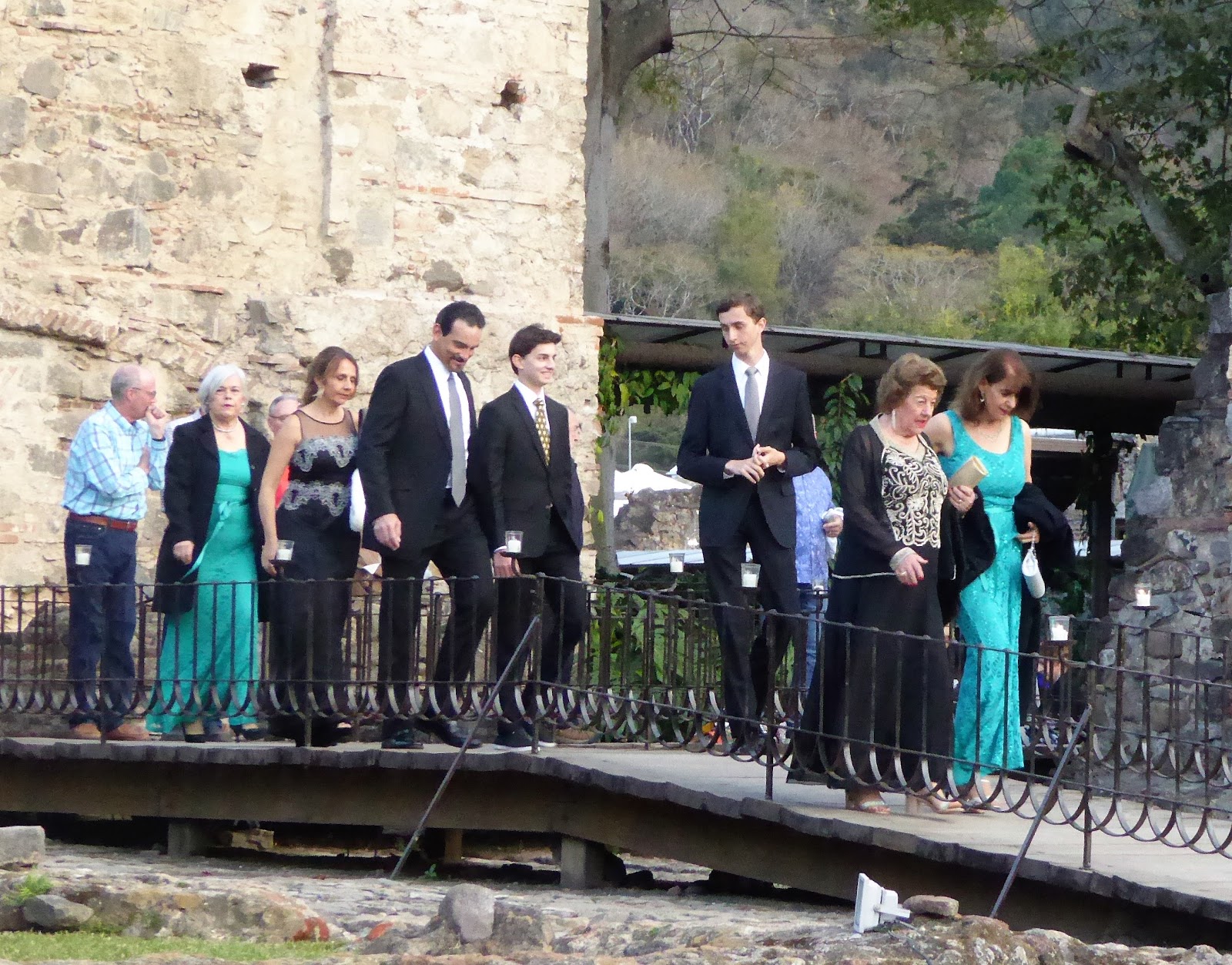
And here's a wedding party enjoying the luxurious surroundings of the world famous Casa Santo Domingo Hotel


My own clueless Gringo moment


There was an odd atmosphere walking round Antigua late at night.  The place was well lit and heavily patrolled by armed police, so safety was not a concern.  The streets were eerily deserted except for the odd desperate peddlar.  

My own encounter was when I only just stopped myself from walking straight past a woman sitting on the ground outside a "tienda" store.  She had a basket of lollipops for sale.  She was nursing a baby.  For nutrition, she was eating one of her own lollipops.

My response to this situation?  I gave her $3.  If I had my time again, I like to think that I would give more.  But talk, as they say, is cheap.

Monday, 25 February 2019

Guatemala's Riviera: Stray Dogs, Scorching Black Sand and Deadly Rip Tides


Decoding Lonely Planet Guides


The first thing you need to know when you read a Lonely Planet Guide, is that the writers can never actually call a place a dump - otherwise who would bother buying the guide?  Case in point - Belgrade in Serbia, the only place where we have ever been robbed - is described as having "a certain Gritty Charm" - a description that is only 50% true.

I have not had the heart to read what Lonely Planet has to say about Monterrico on Guatemala's Pacific Coast.  I am guessing that the guide ascribes "an Appealing Funky Vibe" to the place.  Well it certainly is "Funky".  Appealing?  Let's see.... you cannot swim in the water, half the town is derelict, you could fry an egg on the sand...but yes, in a funny way, the place does have its charms.  Not so much that you want to come back, but not so little that you regret even coming.


Our "hellish" accommodation


For somebody who works as hard as I do, trying to live up to the "Whinging Pom" label, it can be a bit of a trial travelling with such a relentlessly cheerful, resilient companion.  So my miserable little whining heart skipped a beat, when she finally had to concede that our hotel room was "hellish".  

This is what it looked like in the middle of the day:


The decor is still giving me nightmares:


The best thing about the place was that they did not charge us a penalty for moving down the road, and leaving three days early.


Not your typical beach destination


"Gallo" (rooster in Spanish) is the country's best selling beer brand.


But that's no reason for this guy to put on his own impromptu screen test.


Even though you cannot safely swim in the water, the beach has a pleasant, unpretentious family atmosphere.


Magic sunrise among the Mangroves


It was worth getting up before five, to share the dawn with the birds among the mangrove trees.

This guy was our outboard motor:


We have toured mangroves before, but never with volcanoes in the background:


This has to be one of the prettiest commutes in the world.


As so often happens, I had to wait until we got back to the dock, for the action shot of the day.


Black sand beaches have their own beauty


Bottom line


If you are a regular visitor to Guatemala (btw, not an oxymoron) why not give Monterrico a try?

Shopping in Guatemala

Big Macs:  Guatemala joined in the 50th birthday celebrations!


A translation of the company's August 2018 press release reads as follows:

"The Big Mac has conquered the hearts of Guatemalans and together they have lived great and delicious moments. This emblematic hamburger, which has transcended cultures and generations, is characterized as the favorite product of our customers and that is why McDonald's is celebrating its 50th anniversary, " said Paola Castañeda, Senior Marketing Manager of McDonald's Mesoamerica.

Who knew?  During the thirty six years of civil war, atrocities and corruption, people's hearts were living "great and delicious moments" courtesy of Big Macs.

Are Big Macs in Guatemala, cheap or expensive?  The answer depends on who you ask.  

According to the Economist's Big Mac Index website, a tourist from the United States gets a bargain.  In Guatemala a Big Mac costs 25 Quetzales.  At prevailing exchange rates that amounts to only $3.23, whereas back in the States it would cost $5.58.

For most Guatemalans however, a Big Mac is prohibitively expensive.  My Spanish language teacher listed the sort of daily wages, people can expect in different lines of work:


If you are a "campesino" making 40 Quetzales for a day's back breaking labor in the field, a Big Mac might as well be caviar.

What are conscious shoppers to do in such circumstances?  Well, we can do ourselves and the locals a favor, by buying things that we do not strictly need.  Craft goods are not only beautiful, they are heartbreakingly cheap.

My scarf


It's fair to say that I am not known for sartorial elegance.  I have never spent a lot of money on clothes.  Nonetheless I am now the owner of a flamboyant scarf that any dandy would be proud of:


I was lucky enough to get to meet, Micaela Juavez, the weaver who made it.  


She told me that it took a a whole week, of mornings and afternoons, to make it.  Because it was purchased at a weavers' co-operative in San Juan La Laguna, she could expect a fair share of the sale price.  It cost Q175 - equivalent to four Big Macs or $22.

Humming Birds


For family reasons, depictions of humming birds have a special significance for us.


This hummingbird was made by a young woman with a heart defect.  Her medical problems may have been the reason why she was short, even by Guatemalan standards.  The proceeds from her craft sales were helping to pay for her medical bills.


"Chicken bus" picture


San Juan La Laguna is also home to a co-operative for Mayan folk artists.


It was tough to choose from all the wonderful work on display.  In the end we bought this "chicken bus" painting by Juan Perez Mendoza for Q1,200 ($155).


Ukulele cases


One of the problems facing local artisans is that they all make the same limited array of products.  Consequently they end up competing the price down to near zero.  Michele has been racking her brains to come up with an innovative design.  She hit upon the idea of commissioning a talented seamstress called  Debora Magali Gonzalez to make a few Ukulele cases.  Debora loved the challenge, and came up with cases that embodied design flair and craftsmanship.


Of course we are now the proud owners of several ukulele cases, that we do not actually need.  I think, if you asked her nicely, Michele could be persuaded to part with them at the bargain price (for this hand made item) of US$37.50 (C$50) - just sayin' !

Samara: Sex and Other Supplements

Our brush with the Bloomsbury Group

While we were staying at Rheinhold's resort near Samara, we bumped into a woman called Mitey Roche.  Here is her website - https://www.miteyroche.com/about.  Mitey is a woman of diverse accomplishments.  As an actress, she took the leading role in the opening production of a Harold Pinter play.  As a painter, she has had her work exhibited in Cannes, Florence and Mallorca.


Financially her most profitable artistic endeavor, has been the success she has enjoyed as a writer of five independently published, salacious, romance novels.  She told us that she was inspired to go down this path by the success of “50 Shades of Grey”.  She felt she had to be able to write better than that.  The proof has been in the pudding.  She has established a dedicated readership, who appreciate her ability to combine sexually explicit prose with romantic fiction.  She said many of her readers start off with Harry Potter.  From there they move on to Twilight and 50 Shades.  Despite my sincere protestations of admiration for her craft, Mitey would not indulge any curiosity I might have.  She adamantly refused to divulge her pen name.

Her inhibitions on this front might be down to the fact that she is the daughter of acclaimed poet and classical translator Paul Roche.

When Paul Roche died in 2007, there were tributes to his erudition in many papers, including the Telegraph and the New York Times.  Part of his celebrity derived from his connections to the Bloomsbury Group.

The Bloomsbury Group’s mystique arose from the genius of its members in such diverse fields as Art (Duncan Grant), History (Lytton Strachey), Economics (Maynard Keynes) and Literature (E.M. Forster).  Interest in the group has only been enhanced by the complexity of their love lives.  Often they experienced the “love that [at that time] dare not speak its name”.  In many cases they adapted by establishing an apparently conventional marriage with a person from the opposite sex, while carrying on a passionate relationship with someone of their own sex.

While he did not follow this template exactly, Paul Roche certainly provided a flamboyant foot note to the history of the Bloomsbury Group.  The story starts with him wandering round Picadilly in 1947 in a sailor suit, even though he was an ordained priest and even though he had never served with the Royal Navy.  It was in this garb that he attracted the attention of Duncan Grant.  Paul Roche modelled for many of the artist's paintings.

When the clergy of Lincoln Cathedral commissioned Grant to paint a series of murals, they apparently got more than they bargained for.  For many years the chapel containing his murals, was reduced to a store room.


I cannot imagine why the good clerics were so upset


Grant was married to a fellow artist, Vanessa Bell.  That did not stop him and Roche establishing a long, intense (but arguably platonic) relationship that ended only with Grant’s death in 1978.

After meeting Grant, Roche went on to father a child out of wedlock, before finally marrying Clarissa Tanner.  They had four children, the youngest of which is our friend Mitey.

Clarissa seems to have been a remarkable woman in her own right.  She was one of the few people to reach out to Silvia Plath in the bleak last months before the young poet’s suicide.  Likewise she set aside any jealousy she may have felt, and welcomed Duncan Grant in his last days into her home, so that he could die among friends. 


Reinhold's Redemption:  Sleeping Dogs don't lie


Rheinhold is the fictional name (for reasons which will become clear later) of an eccentric 69 year old German proprietor of a hotel set back in the jungle, some ten minutes’ walk from a deserted beach.

Like a lot of the best travel experiences, this one started with major misgivings.  It was only after we had paid for our booking, that we came across a scathing online review of the place.  Our concern only increased when another German local, practically begged us not to make the mistake of going to this hotel.  I was left expecting some Teutonic version of Basil Fawlty, complete with silly walks and barked orders to the staff.
  
As it turned out, the only similarity with Fawlty Towers was that nobody mentioned the war.

The way a person treats defenceless animals often provides a clue to their true personality.  Rheinhold has a couple of aging arthritic Labradors.  Nothing is too much trouble for these dogs.  They are taken down to the beach every day for a swim in the surf.  During the heat of the day they get to cool off by sleeping in a pit of loose earth.


Rheinhold’s menagerie extends to a “Playmobile” type farm that includes chicken, geese and a solitary sheep.


This sheep never got the memo about belonging to a nervous, skittish breed.  It liked liked nothing better than to chase panicked, honking, geese around the pen.  The staff were quite disgusted with the sheep's mischievous behaviour, and used to hurl rocks and branches at it, as hard as they could.

The only animal we did not appreciate was this guy


Nocturnal trips got a lot more complicated after this encounter.  The process involved locating the cell phone, switching on the torch app, and then scanning the floor for any nasty intruders.


Reinhold's Redemption:  A "Shawshank" beach


There’s an iconic scene in the Shawshank movie where, at the end of their terrible odyssey, Tim Robbins and Morgan Freeman finally get to Zihuateneo, and are able to celebrate their freedom walking along a deserted beach.   Anybody who has been to “Zihua” recently, will know that it is heavily developed and far from deserted.

For the real experience you can go to this beach which is ten minutes walk away from Rheinhold’s resort:


Reinhold's Redemption:  Sex and other Supplements


As soon as we arrived, we got the first clue that things might not be as they seemed.  We were met by a lively young German lady, Hilda (name also changed) straight out of high school.  Far from resembling the intimidated intern suggested by the online review, she looked blissfully happy.  In fact, there was an odd, slightly glassy, aspect to her facial expression.


The strangeness continued when Rheinold treated me to a dissertation on all the supplements he is taking.  Apparently, his physique had been much the worse for wear after forty years of partying.  His blood pressure was high and he was developing type 2 diabetes.  He responded with Germanic thoroughness, spending months conducting online research, as well as spending a small fortune getting supplements couriered down to his lonely outpost.


The results are impressive.  The blood pressure is down.  His blood sugar is back to normal.  His hips have shrunk to the point where his pants keep slipping down and revealing a bit of butt cleavage.  He is physically strong and youthful.  The only thing that betrays his years of excess, are the black rings around his leathery face.  The effect resembles a person who has forgotten to take off their Halloween make up. 

He went into some detail about his path to physical redemption.  Apparently the sugar craving that we all experience, is attributable to the presence of sugar loving parasites in our brains.  He fixed this problem by ingesting Turpentine pills.  His efforts to combat stomach parasites were so successful, that on the occasion when he was taken short on the beach, he was able to see thousands of the little blighters wriggling around in the sand.

However he reserved his most significant look, for the moment when he confided that all these supplements had also restored his libido.  I did not think much about it until a couple of days later.  There’s not a lot going on in this part of the world, so tongues started to wag when it was reported that he had been seen strolling along the beach with a bikini clad Hilda, while his hand rested on her barely clothed, barely legal, behind.